
Maker History · 1904 – 1930
AutoStrop and the razor that sharpened itself
Henry Gaisman's Valet AutoStrop let you strop the blade without taking the razor apart. Then a patent fight ended with AutoStrop's founder at the head of Gillette.
Stropper.com archive · November 13, 2026
Gillette's pitch was that you never had to strop again: when a blade went dull, you threw it away. Henry Jacques Gaisman bet the other way. If stropping could be made effortless, one good blade might last for weeks.
The inventor
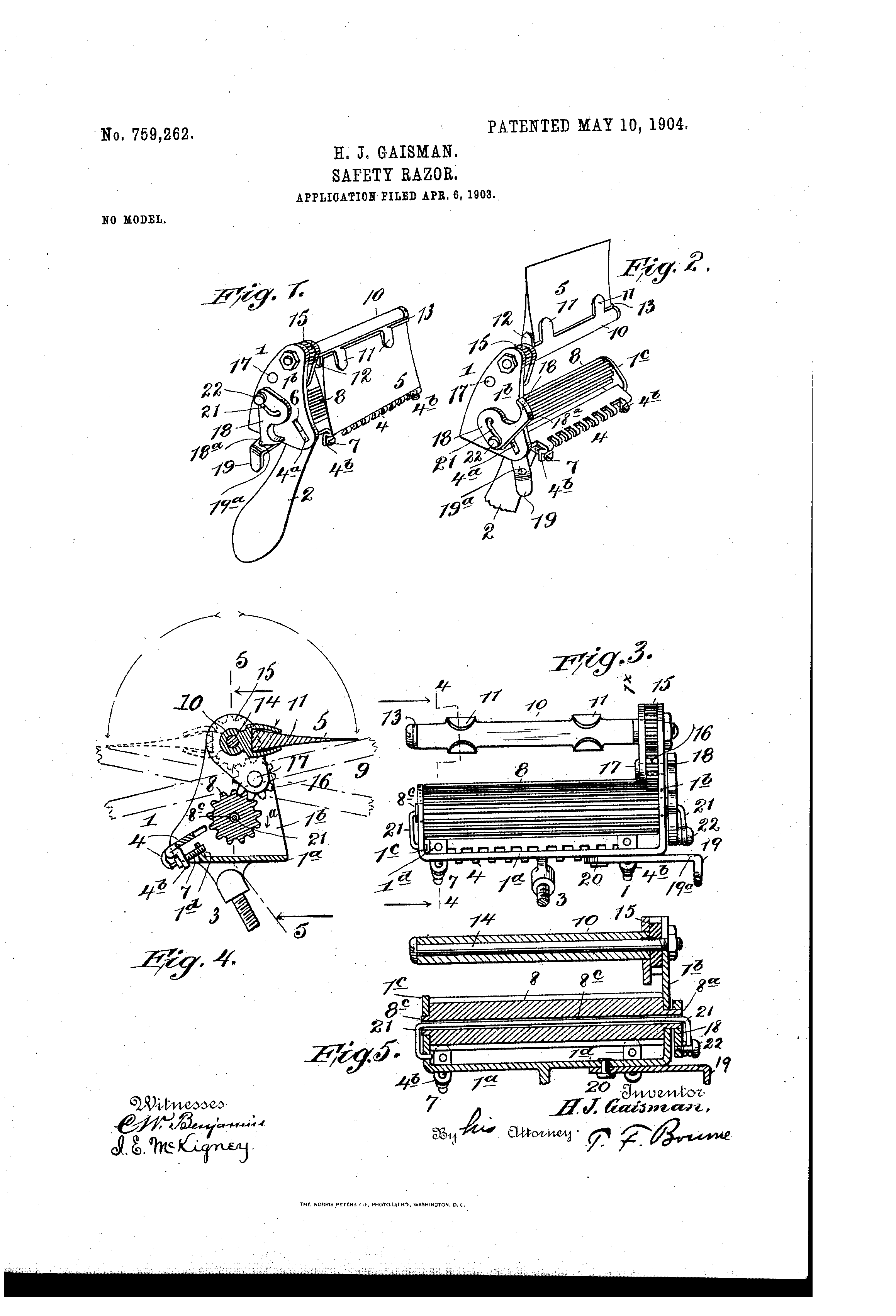
Gaisman was born in Memphis, Tennessee. Wikipedia gives his birth date as December 5, 1869, while the Smithsonian gives the year as 1870. He died in 1974 aged 104, after a career of more than a thousand inventions, the folding autographic camera among them. His first safety-razor patents came in May and July of 1904. One of them, U.S. 759,262, granted May 10, 1904, shows a razor whose blade could be stropped while still held in its frame.
How it worked
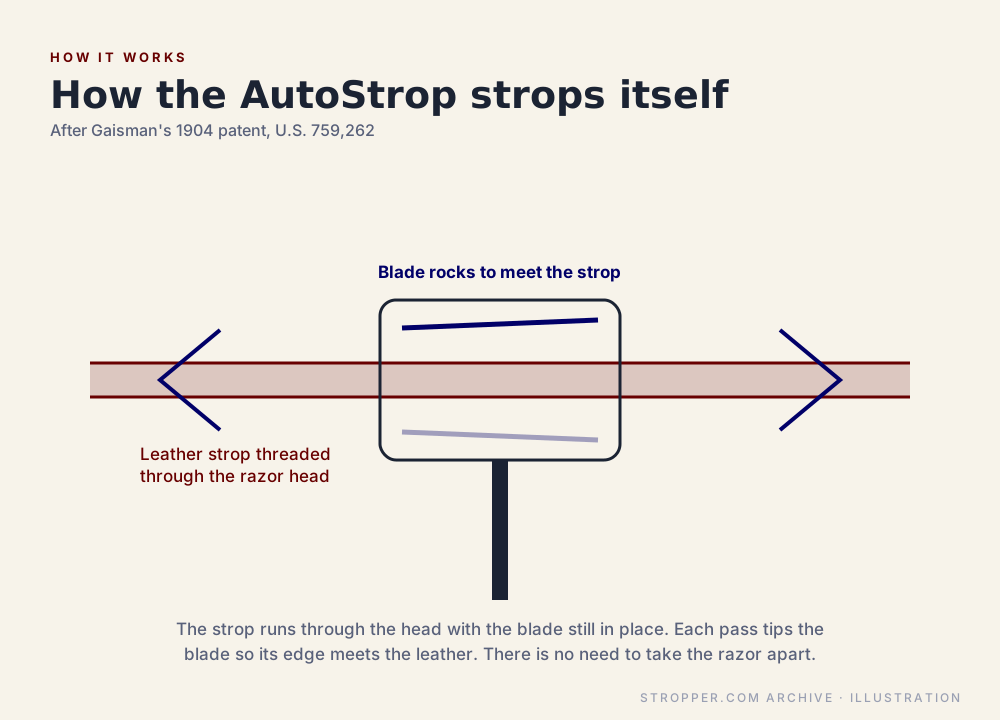
The Valet AutoStrop was a single-edge razor with a slot through its head. You threaded a leather strop through the head and slid the razor back and forth. On each pass the blade tipped to meet the leather with the right side forward. There was nothing to unscrew and nothing to take out. Later boxes made the point plainly, calling it the razor that sharpens itself.
A company on three continents
The Smithsonian records that Gaisman established the AutoStrop Safety Razor Co. in 1906. The pieces in this collection show how far it spread. Early sets are marked Auto Strop Safety Razor Co., 345 Fifth Ave., New York, with branches at 14 St. Helen St., Montreal and 61 New Oxford St., London. Canadian razors read Auto Strop Safety Razor Co., Limited, Toronto. British Valets were later made at City Road in London and at Isleworth, Middlesex. During the First World War AutoStrop sold soldiers' kits too, and the archive holds two "Army" sets.
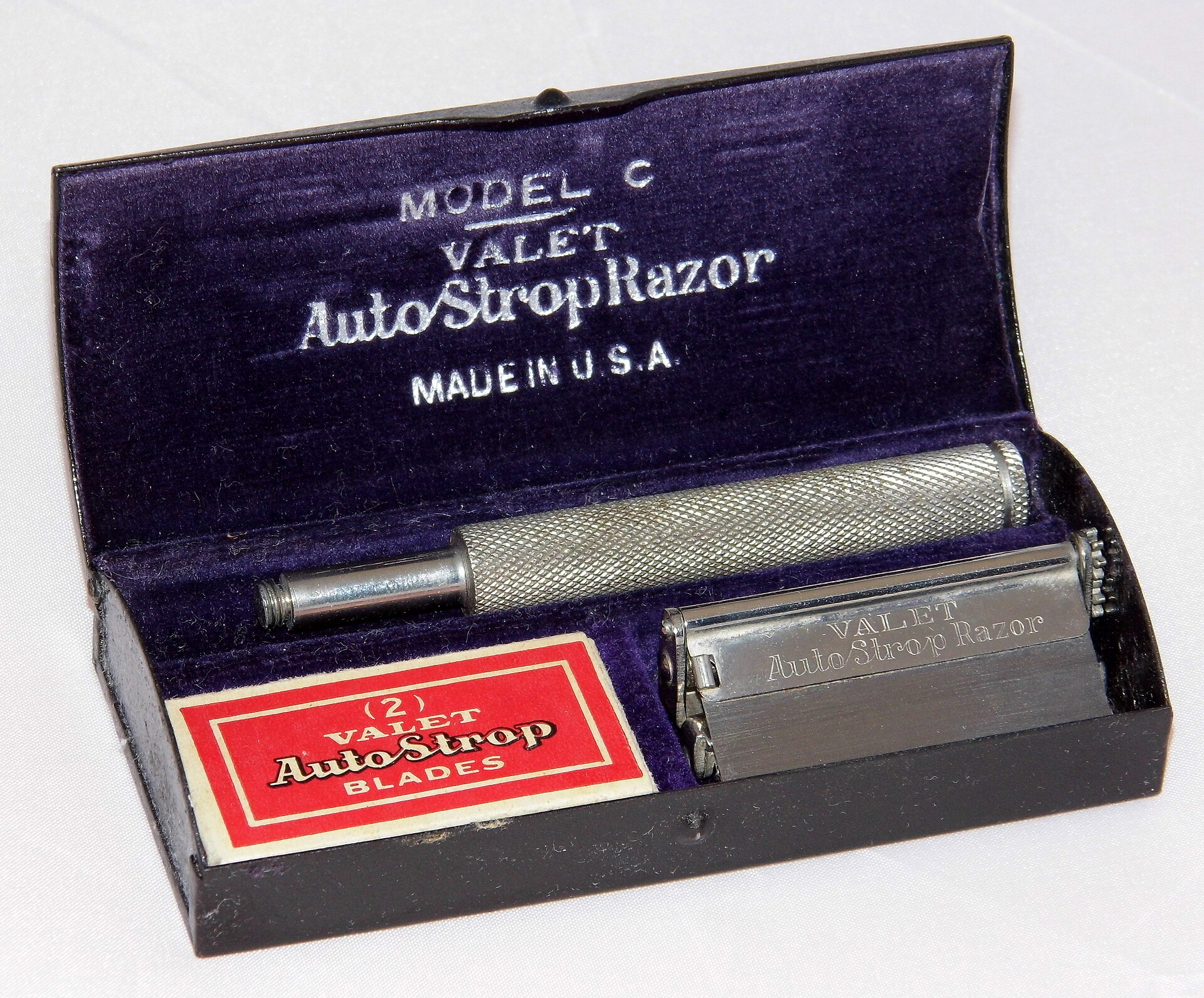
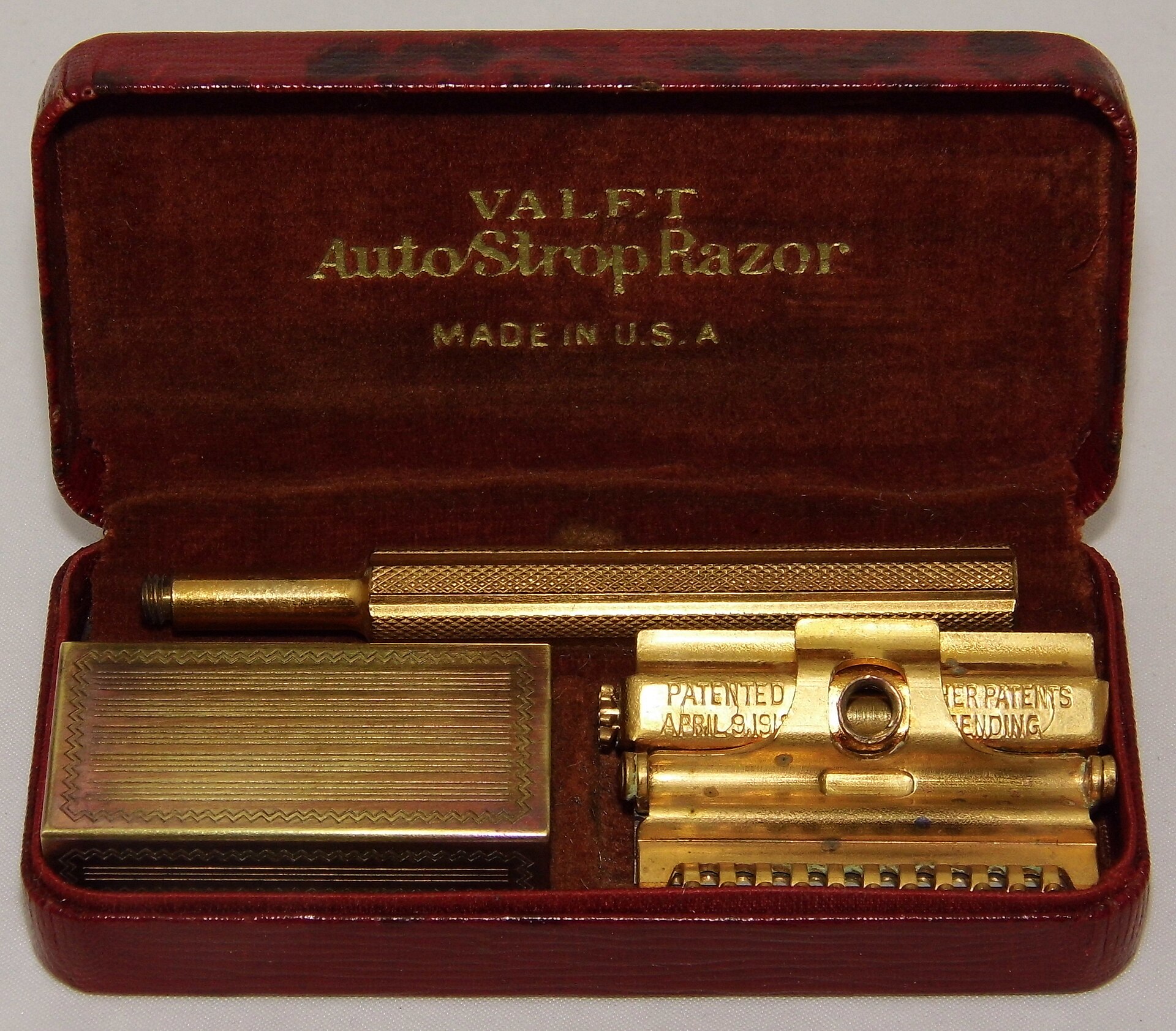
The Smithsonian holds a boxed AutoStrop razor printed "The Million Dollar Razor." Period advertising claimed years of research and a million dollars in experiments behind it. The exact launch date and wording of that campaign are still to be checked against a dated advertisement.
Probak, and the takeover of Gillette
In 1928 Gaisman patented a double-edge blade with a distinctive slot pattern and sold it under a new name, Probak. A Probak blade fitted Gillette razors, but Probak razors would not take Gillette blades. Gillette was working on its own new razor and blade at the same moment, and it launched them in 1930. In April 1930 AutoStrop sued Gillette for patent infringement.
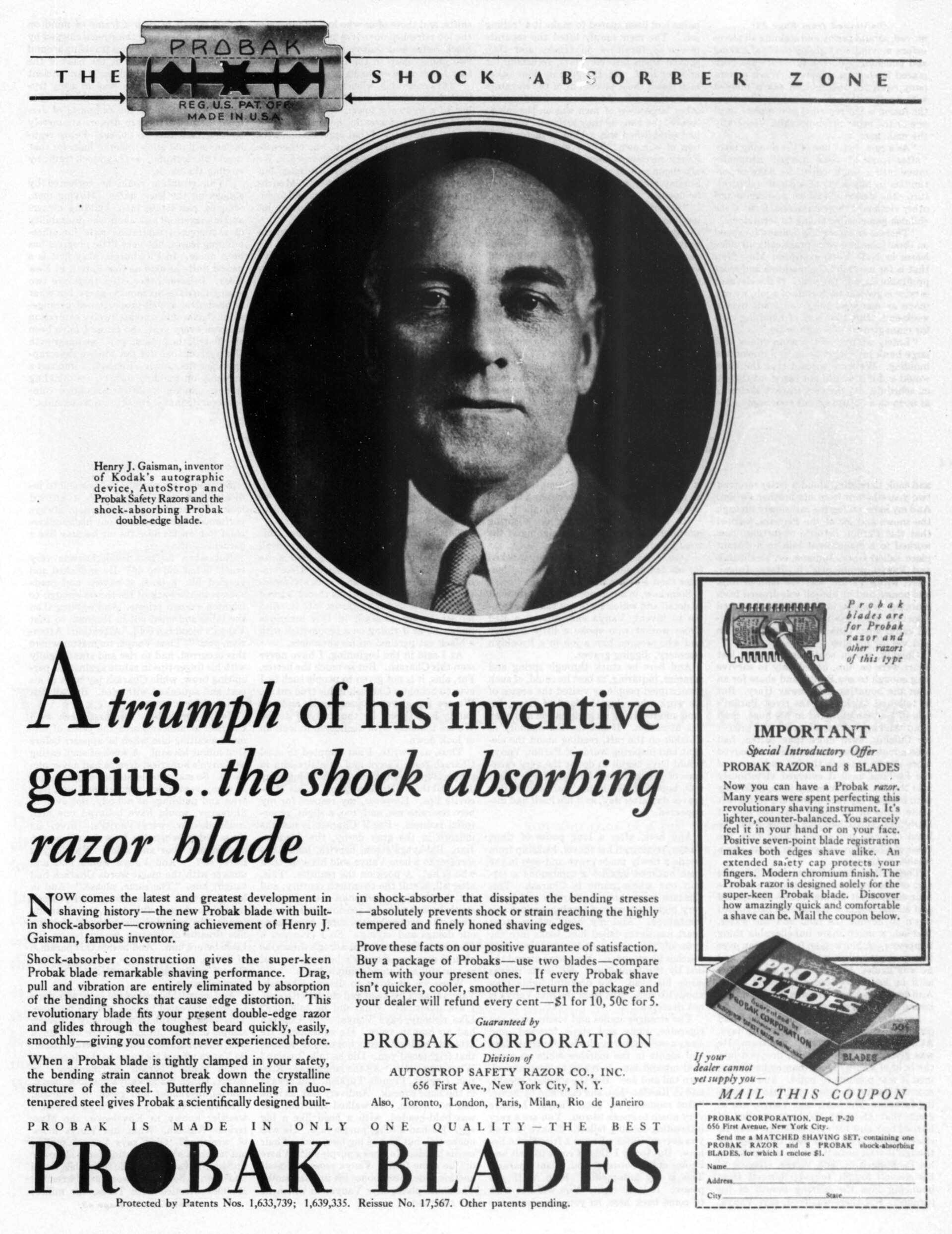
Gillette chose to buy rather than fight. The merger was announced on October 16, 1930. AutoStrop held out for preferred stock with voting rights, and the deal left Gaisman with a controlling interest in Gillette. The Smithsonian's summary is short: Gaisman founded the company in 1906 and sold it to Gillette in 1930.
After the merger
The Valet name lived on. Later pieces in this collection read Gillette Safety Razor Co., Auto Strop Division, Boston and Auto Strop Division of Gillette Safety Razor Co., Limited, Montreal. British-made Valets were still advertised in the 1940s with their built-in strop.
See the 57 AutoStrop pieces in the archive on the maker page.
Sources
- Smithsonian NMAH, AutoStrop Safety Razor ("The Million Dollar Razor")
- U.S. Patent 759,262, H. J. Gaisman, Safety-razor (May 10, 1904)
- Henry Jacques Gaisman
- Gillette company history (merger announced Oct. 16, 1930)
- Ingenium (Canada), Valet razor by Autostrop Safety Razor Co. Ltd., Toronto
- Probak advertisement, The Saturday Evening Post, Aug. 9, 1930 — Wikimedia Commons